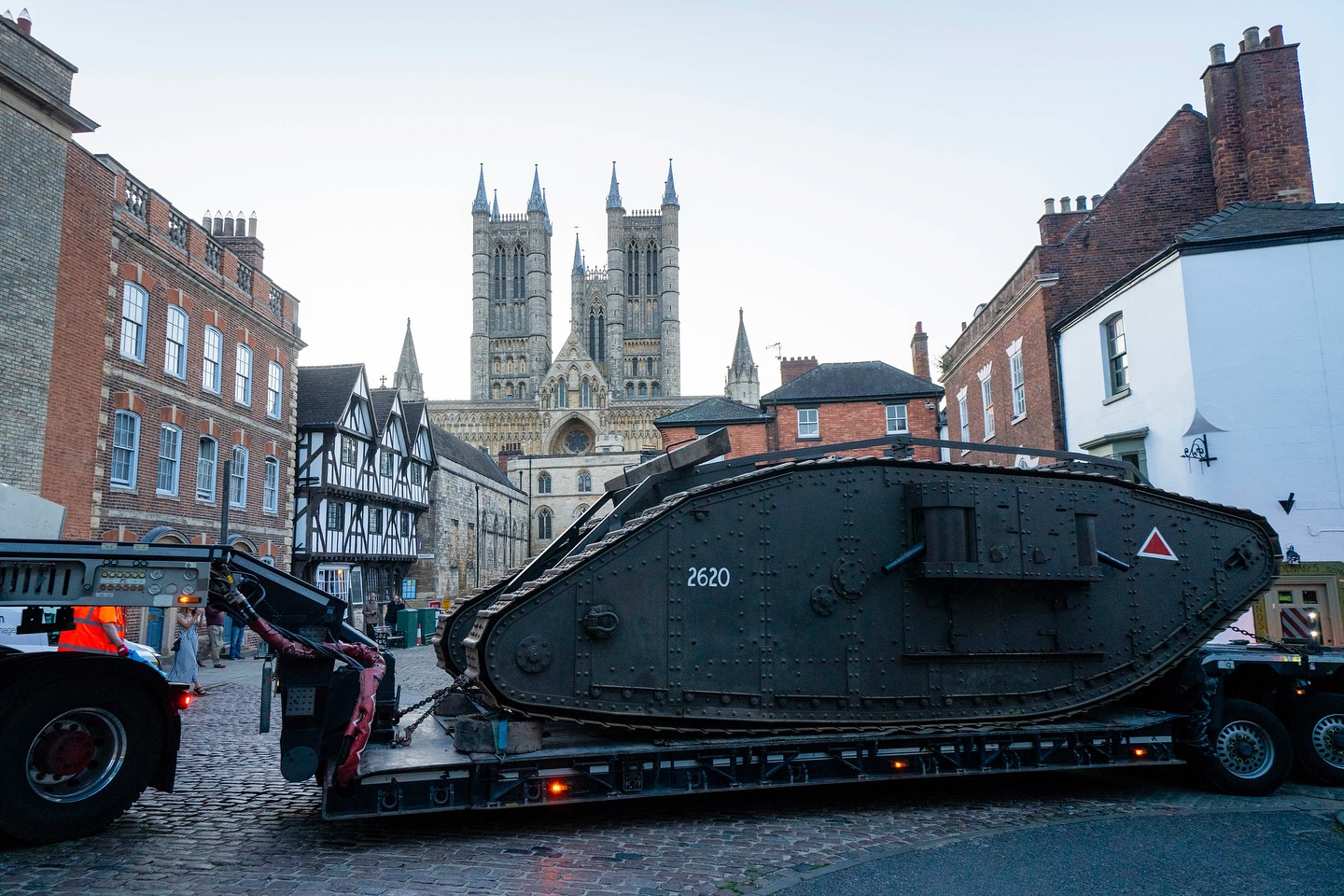
I recently helped the White Hart Hotel in Lincoln generate TV coverage to mark its receipt of World Origin Site status. Securing TV coverage is no mean feat. Here’s what I did to secure maximum coverage and my top tips if you’d like to secure TV coverage for your business.
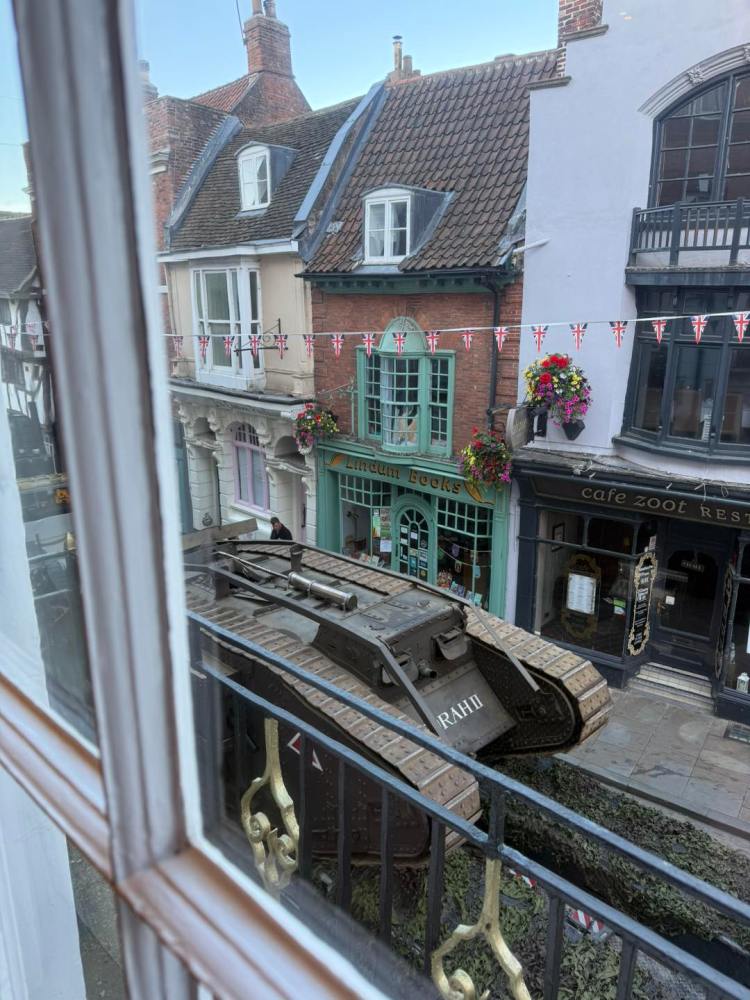
The event
A plaque was to be unveiled accrediting the room at the hotel where the concept of the tank was developed in 1915. The White Hart Hotel was keen to secure maximum media profile and mentions of their name. TV planners are looking for something visually impactful with a ‘news’ angle such as a historic anniversary or a UK first. They also want plenty of good spokespeople to talk to. It was essential to deliver an unveiling event that was visual, dramatic and really captured the media’s attention whilst simultaneously highlighting the historic significance of the event.
The solution
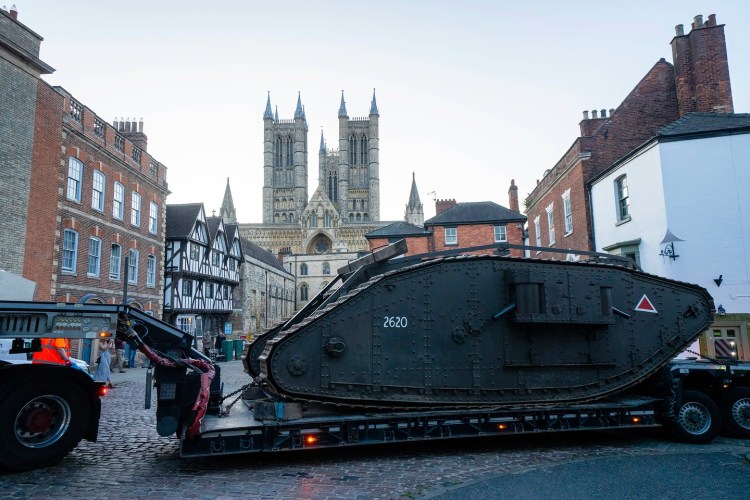
Getting a real tank to the unveiling event would generate significant media interest – providing a dramatic visual against the steep narrow streets and historic backdrop of the city. The hotel made approaches to Guy Martin and the Norfolk Tank Museum to secure his involvement in unveiling the plaque and his replica WW1 tank being transported from Norfolk to Lincoln to be positioned outside the hotel.
The logistics and last-minute nature of permissions for a monster move of this scale meant I prepared for two possible scenarios – both with the tank and without it. I meticulously researched the history of the Tank Room and the replica tank, developed detailed spokespeople biographies and collated a library of historic and recent images. I tipped off TV planners about the tank and Guy Martin to ensure it was in their long-lead planning diaries whatever the final scenario.
As soon as the tank and Guy Martin were confirmed, PR activity went into overdrive to maximise the opportunity. It was essential that the story centred around the hotel and the Tank Room and was not overshadowed by the replica tank with the story just becoming that a ‘tank visits Lincoln’. I developed key message documents to brief all spokespeople and liaised with all media to ensure their coverage covered all key messages. This included helping source historic images and footage of tanks to support their features.
I invited all key local, regional and national media and liaised with the hotel’s social media team to ensure joined up messaging and content. I recommended working with PA Media Photography to enable our client to maximise opportunities the visuals to be picked up by national media.
The outcome
As a result of this planning and meticulous attention to detail, I secured extensive coverage including reporting throughout the morning on BBC Radio Lincolnshire. The story made the evening news bulletins on both ITV Calendar and BBC Look North with extended pieces mentioning the hotel and interviewing the hotel owner, all with the visual backdrop of the hotel. I also secured extensive local and regional coverage including across key digital news titles. The media coverage around the event successfully created a real buzz, with hundreds of people coming to visit the tank during its day in the city. People continue to talk about the event and share the coverage online.
Key learnings
- Make sure your event includes something really visual for TV – ideally something big and something that moves.
- Consider the backdrop to the event to ensure your branding comes across during both media coverage and public who come to see what is going on.
- Ensure you have a number of good spokespeople available. Write a short biog with image about each person highlighting what they can talk about and a list of when they will be available.
- If your event focuses on a historic anniversary, research historic images and video footage that can be used in the TV piece.
- Get in touch with TV planners a month in advance even if your event might not happen. This gets it on to the planning calendar.
- Be prepared to be flexible. TV and radio will have a clear idea of how their piece will work. They are more likely to go ahead if you can be flexible and accommodate their suggestions.
- Using a photographer/videographer from a photo agency can really help increase the amount of media coverage you receive, especially from the nationals.
- Ensure you are joined up with your social media team with consistent key messages and ensuring that they share media coverage on your channels.
- Ensure you capture all media coverage straight after the event because it often disappears very quickly, particularly TV coverage.
If you are seeking TV coverage for an upcoming project or event, I’d love to chat.
 Emma Kate Farley Communications